The Aquatic Olympic Centre Greater Paris Metropolis opened its doors to the public on Monday, 2 June 2025!
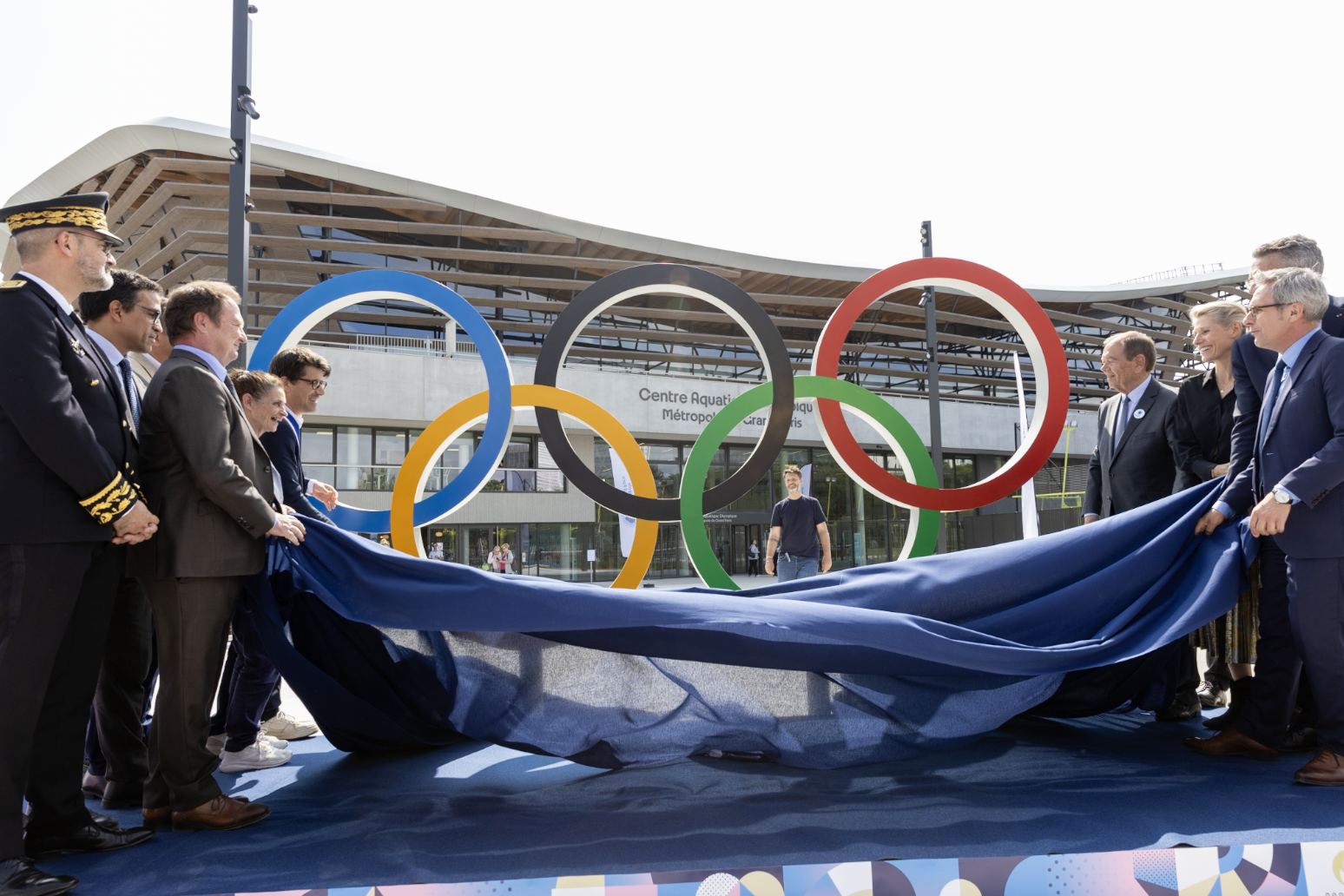
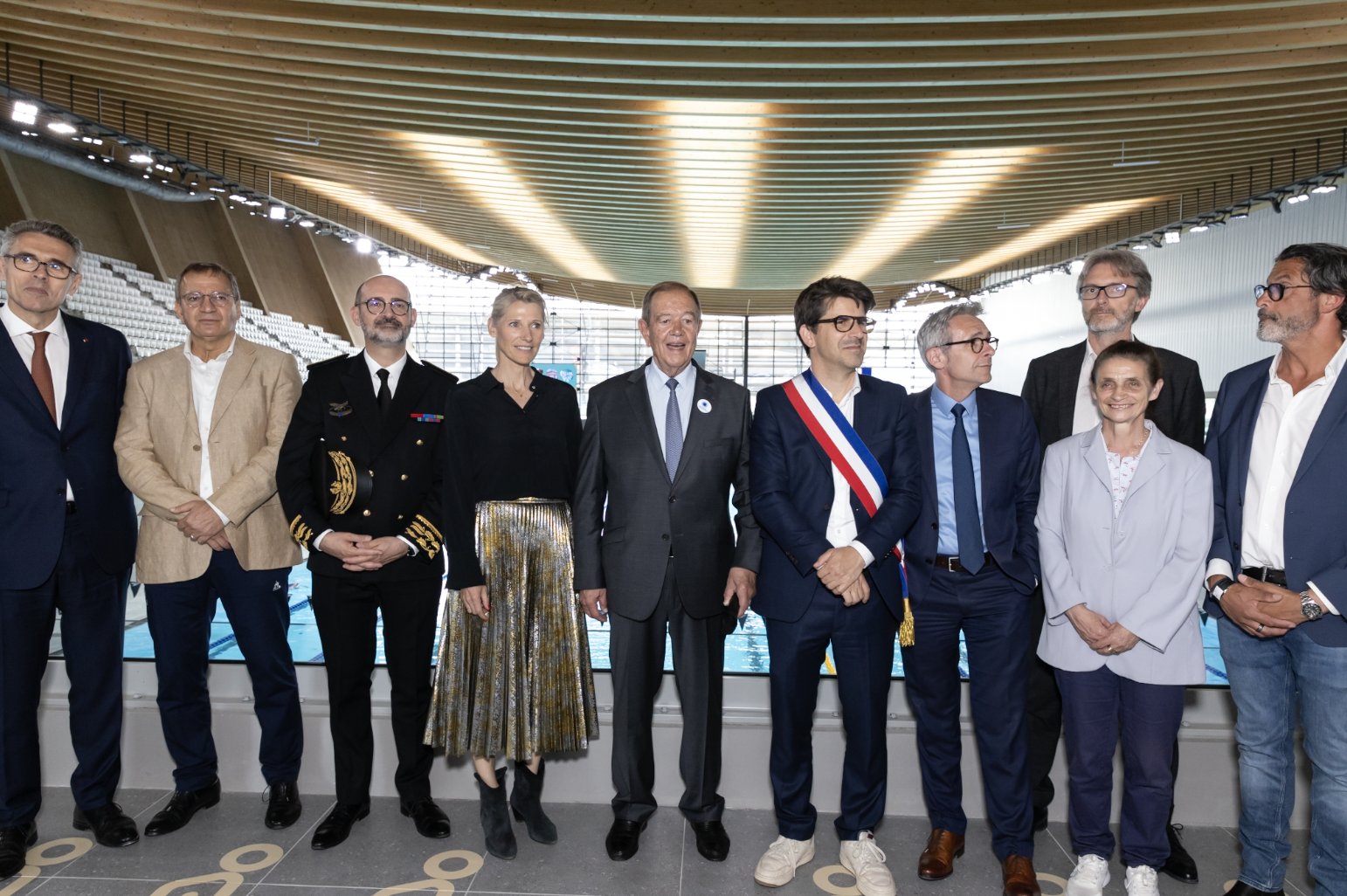
A flagship facility for the Paris 2024 Games, the Greater Paris Metropolitan Olympic Aquatic Centre (CAO MGP) embodies the legacy and universal values of the Games. On Monday 2 June, it opened its doors to the public in the presence of Marie Barsacq, Minister for Sport, Youth and Community Life, Patrick Ollier, President of the Greater Paris Metropolitan Area and Vice-President of Solidéo, former Minister, Mathieu Hanotin, Mayor of Saint-Denis and President of Plaine Commune, Patrick Bloche, First Deputy Mayor of Paris, Stéphane Troussel, President of the Seine-Saint-Denis Departmental Council, and Patrick Karam, Vice-President of the Île-de-France Region. The Olympic rings were unveiled at the event.
Designed by Ateliers 2/3/4/ and VenhoevenCS to meet the needs of younger generations and athletes, the CAO MGP aims to offer a new spatial experience and transform the area in a sustainable way through its accessibility and rich programme, its bio-based architecture and its concentration of technical innovations.
It illustrates how an Olympic facility can become a permanent public resource, adding social, ecological and spatial value to the city. In this sense, the Olympic Aquatic Centre is a replicable model of circular sports infrastructure in the context of large-scale urban transformation.
A local facility that promotes social diversity and sporting activities
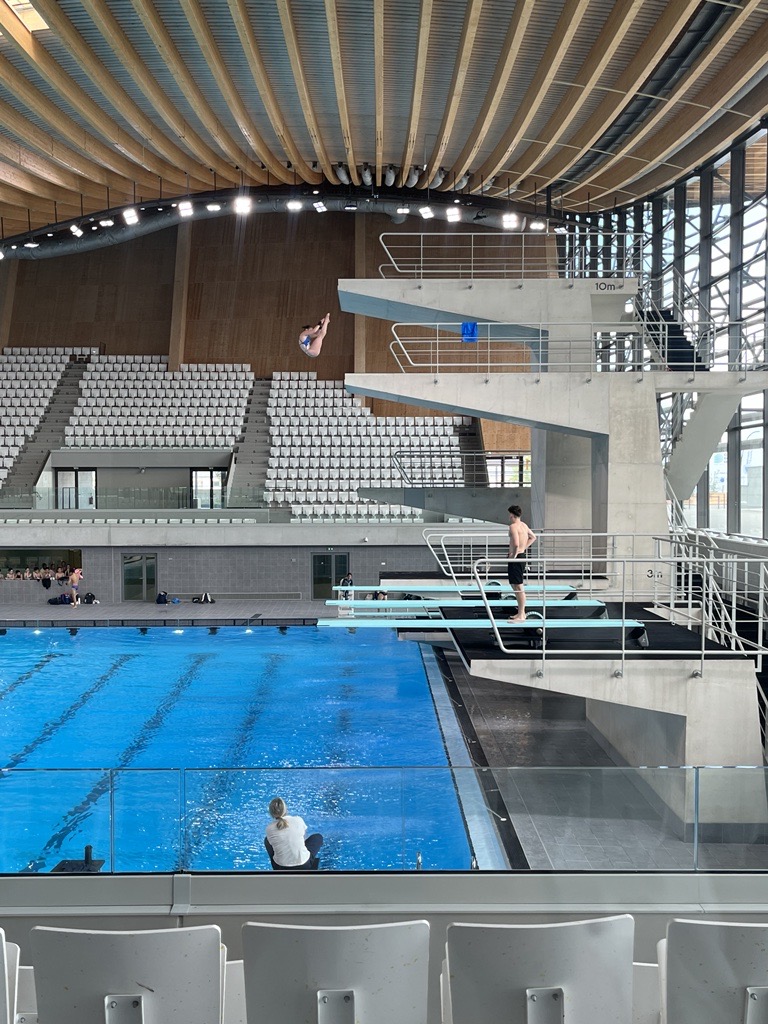
After shining during the Paris 2024 Games, where it hosted the water polo, diving and artistic swimming events, the Centre Aquatique Olympique Métropole du Grand Paris is now a multi-sport complex open to all.
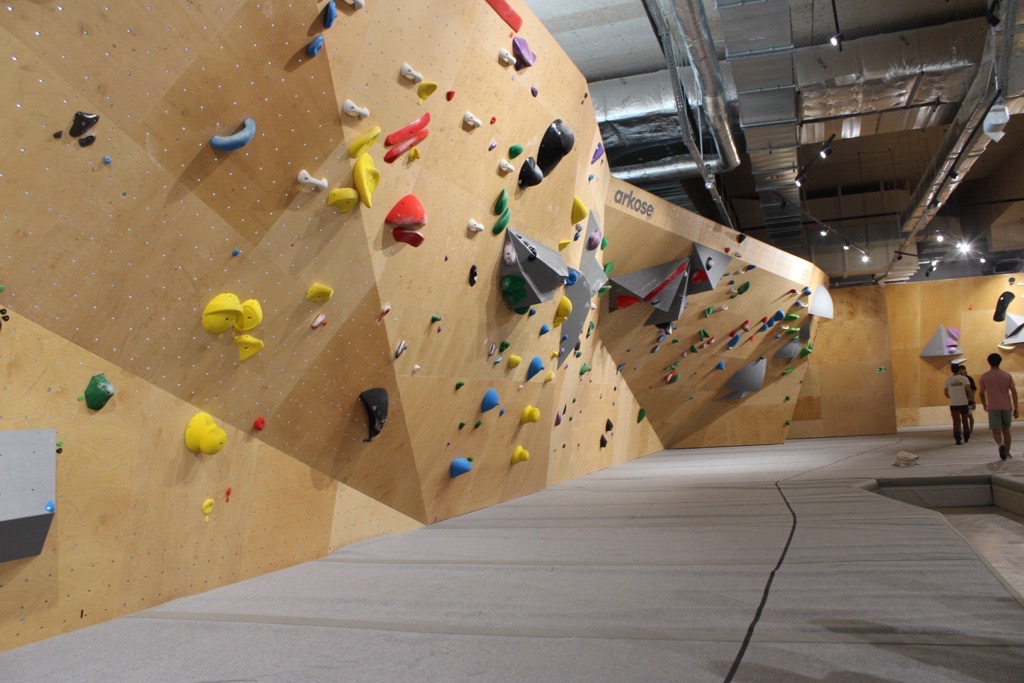
Professional and aquatic sports, swimming lessons, bouldering, padel tennis and fitness activities, as well as sports recycling, catering and relaxation facilities, now coexist within this unique venue.
The CAO MGP was designed to become a friendly cultural hub where movement and sports become catalysts for social interaction, bringing together people of all ages and backgrounds. It is also 100% accessible to people with reduced mobility.
Its diverse programme promotes chronotopy and intensity of use. Accessible to all residents of Greater Paris and the city of Saint-Denis, it will play a central role in:
- teaching swimming to residents of Seine-Saint-Denis,
– training in diving and competitive swimming for teams from the French Swimming Federation,
– amateur and recreational sports for residents of the Paris region and employees of large companies located nearby.
It is in this convergence of leisure, dreams and achievement that the Greater Paris Olympic Aquatic Centre comes into its own and asserts itself as a new architectural landmark.
A bio-based and reversible design offering a unique spatial experience
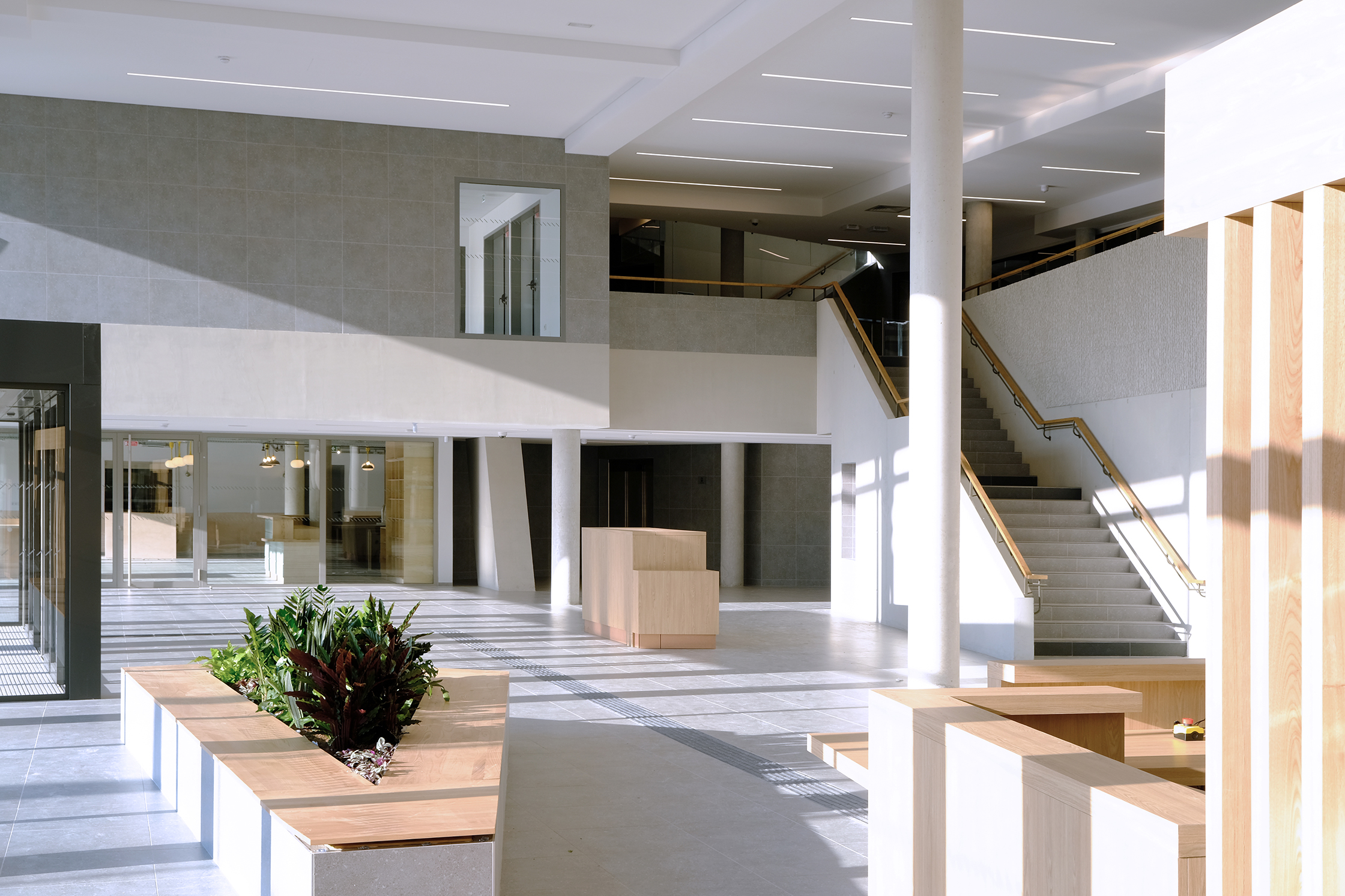
In its heritage version, the CAO MGP offers a unique spatial experience thanks to its bio-based, modular and reversible design, flooded with natural light.
An architecture that encourages movement, promotes well-being and reframes the relationship between the body, space and sport.
On the first floor, the Olympic hall unfolds majestically with its view towards the Stade de France. Once the astonishment – or rather the wonder – has passed, a feeling of well-being prevails.
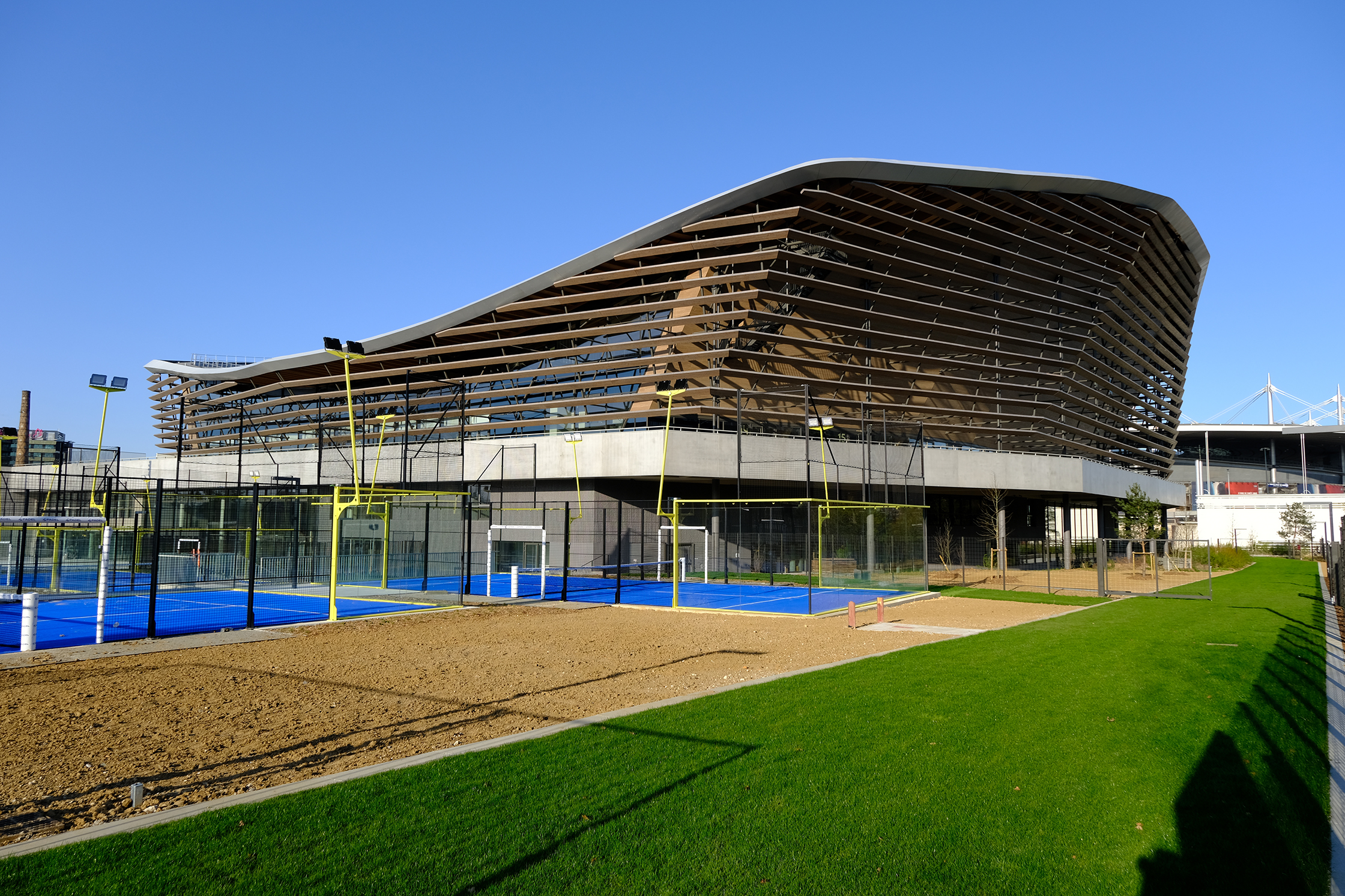
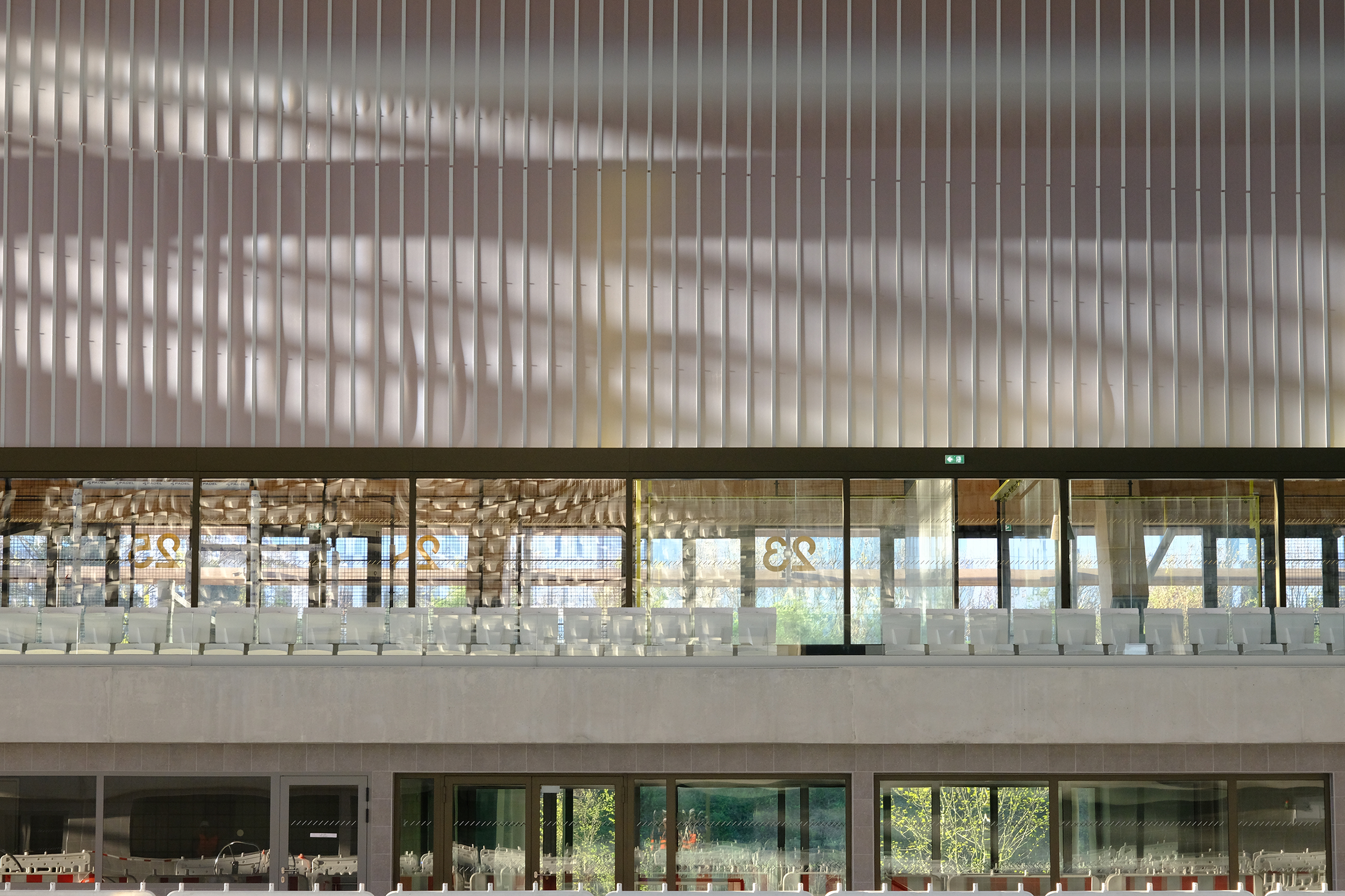
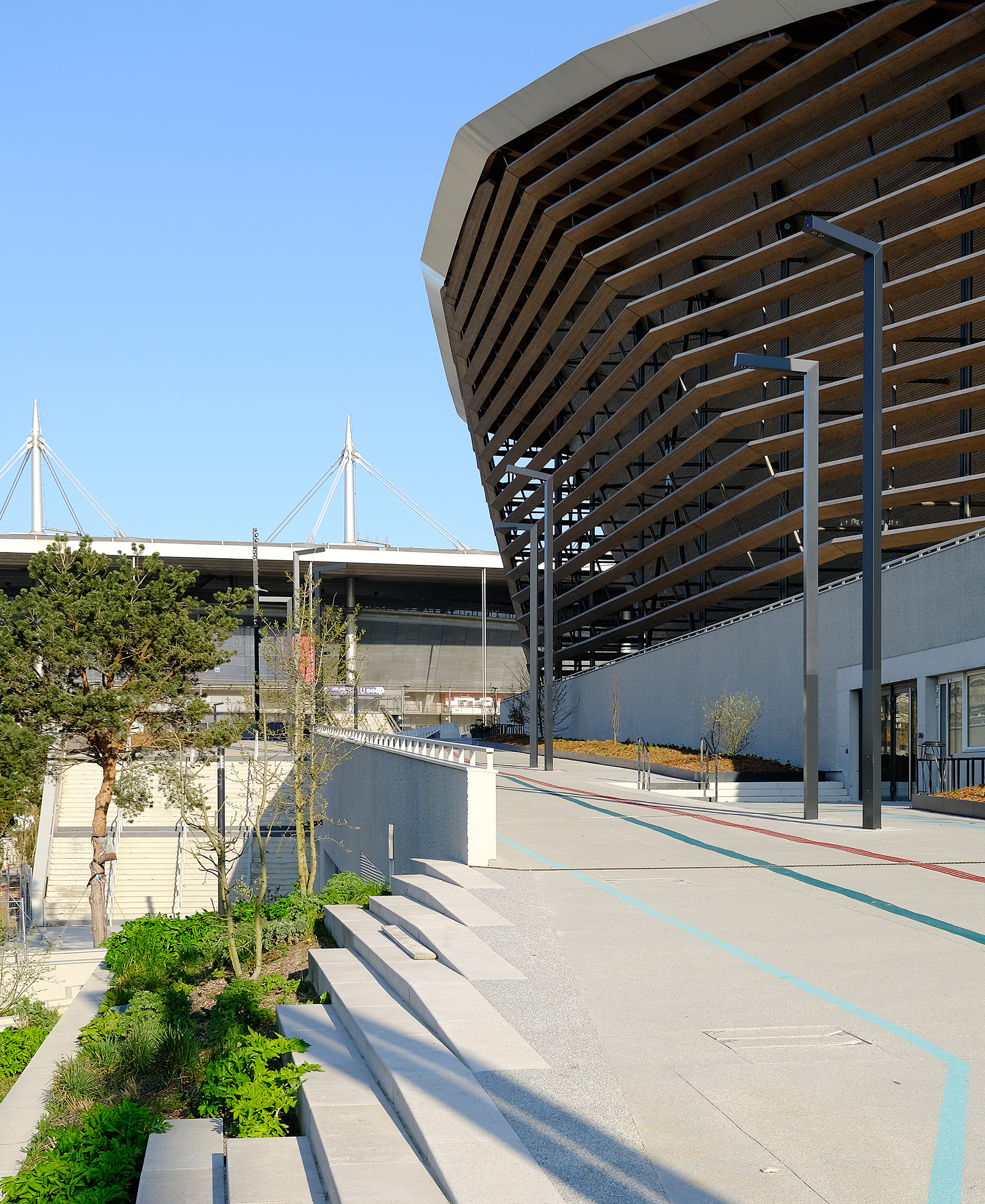
Thanks to a simple and lightweight construction system, the wooden frame shapes the identity of the place, ensuring energy performance, acoustic comfort and aesthetic consistency. Its materiality and the graphic design of the 91 chains of its curved roof, combined with soft colours on which the light shifts throughout the day, give it a warm and intimate scale and atmosphere, which can be found in all areas: the reception hall, the leisure and learning pools, the fitness rooms, the padel tennis courts, the restaurant and the bouldering area.
Open to the outside world, connected by these transparent elements and overlapping sightlines, these spaces spread across interconnected levels expand, appearing larger than they actually are. However, the perceived scale is not intimidating; on the contrary, it soothes and inspires, refocuses and encourages perseverance and excellence in one’s practice, or even the discovery of other disciplines. It also invites a different relationship with architecture.
The CAO MGP is a sculptural cocoon that can be experienced from both inside and outside. This new architectural landmark stands out for its exceptional environmental performance.
A concentration of sustainable and replicable technical innovations
Designed with sustainability in mind, the Centre Aquatique Olympique Métropole du Grand Paris is HQE Exceptional certified and BiodiverCity labelled. It combines passive solutions and technical innovations, confirming our assumptions about sustainable design: consume less, consume better.
The reuse of resources and materials was prioritised in its design. Opposite the north stand, which still boasts 3,000 seats made from 100% recycled and locally sourced plastic, the temporary south stand has been dismantled. It has been replaced by three padel tennis courts, which complement the six outdoor courts.
The movable walls that supported the 9-metre beach required for Olympic events now allow the diving and swimming pools to be configured in several different ways.
The 4,680m² of photovoltaic panels installed on the curved roof, which stands out for its slender structure, will generate 25% of the building’s energy needs. 85% of the energy consumed will come from renewable and recovered sources, while 50% of the water used will be recovered.
This virtuous ecosystem, which contributes to making the building a model of sustainable design, extends to the exterior and helps to transform the surrounding area in a sustainable way.
A sustainable transformation of the region, symbolising virtuous urbanism
At the heart of a changing region marked by its industrial and service sector heritage, the Greater Paris Olympic Aquatic Centre brings fragmented areas together and asserts itself as a central location in the Île-de-France region.
Located on the edge of the A1 motorway, it now forms a national and international sports hub with the Stade de France, which it faces. The two arenas are connected by a 100-metre-long and 20-metre-wide pedestrian bridge that elegantly and lightly spans the motorway. Now accessible and open to traffic, the bridge has become a support for landscaped public spaces with a variety of uses. Its typology brings it closer to a public square that also promotes soft mobility, by bicycle or on foot, from RER lines B and C, as well as metro lines 13 and 14 and the Grand Paris Express.
Part of a wider ecosystem that includes the latter and Plaine Saulnier Park, the Greater Paris Olympic Aquatic Centre blends into a green and evolving landscape. Its appearance from different viewpoints is primarily vegetal. The base of the building gives way to the surrounding nature: a dense, open landscape, like a large active ribbon wrapped around the building, offering sequences of peaceful life and movement.
In what was once an arid, concrete landscape, the Grand Paris Olympic Aquatic Centre is much more than a large-scale sports facility; it is a symbol of sustainable and virtuous urbanity.
_
The Grand Paris Olympic Aquatic Centre in figures:
- a built area of 20,000 m²
– a concave wooden frame consisting of 91 chains with a span of 90 m, making it the largest suspended wooden roof in the world
– 4,680 m² of photovoltaic panels, making the CAO MGP one of the largest urban solar farms in France
– an Olympic hall with two modular diving and swimming pools allowing for different configurations and 1m, 3m, 5m, 7m and 10m diving boards for synchronised diving training for the French team
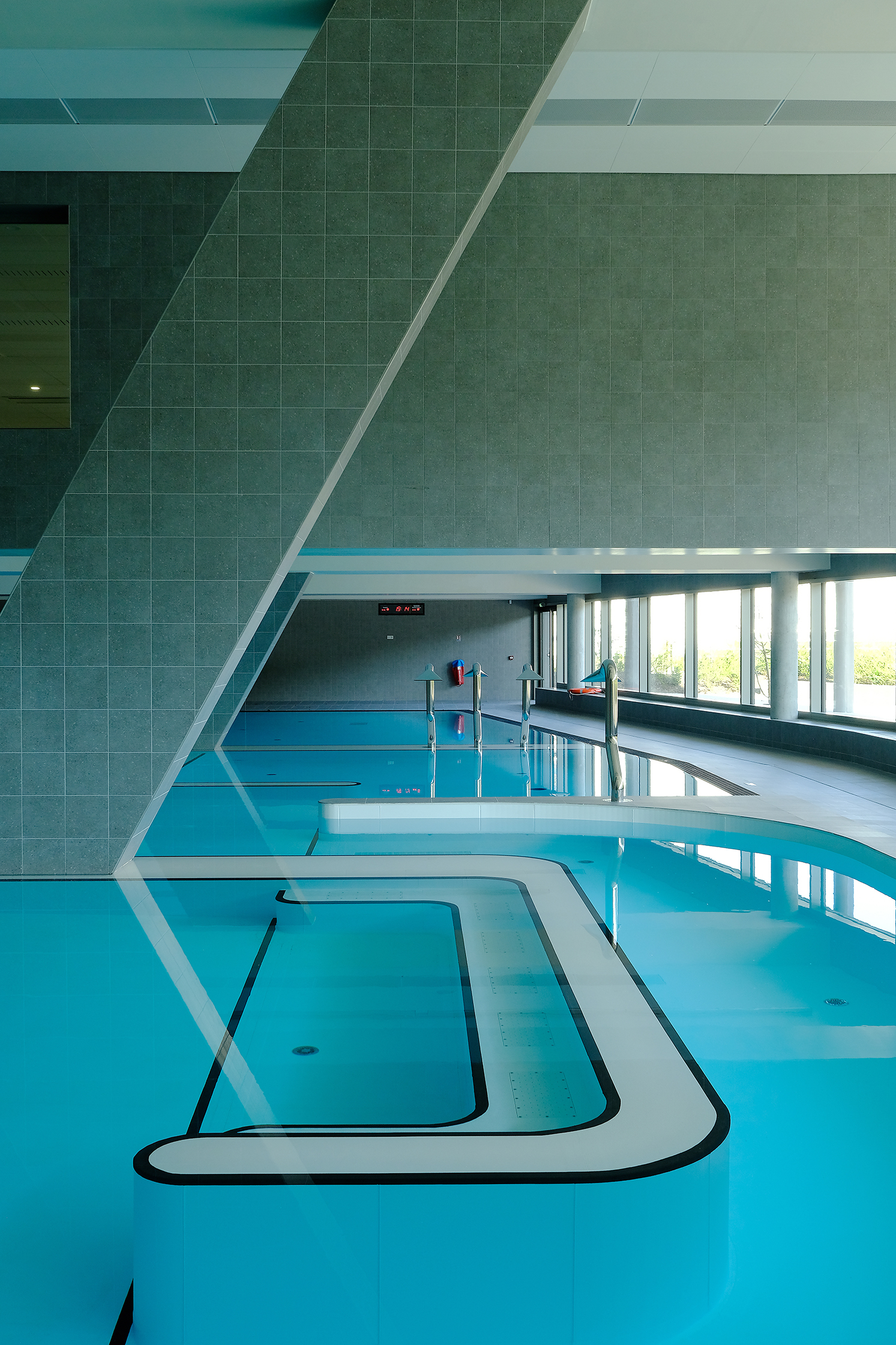
– a learning pool (25m, 4 lanes, shallow depth of 1.1m to 1.3m)
– a 368m² multi-purpose water park pool for families, with games for children
– a 1,000m² bouldering climbing hall
– a fitness area offering a cardio training area with connected machines
– a restaurant offering produce from the Saint-Denis urban farm
– a sports recycling centre
– 9 padel tennis courts
_
Project owner: Métropole du Grand Paris
Consortium representative: Bouygues Bâtiment Ile-de-France
Sub-consortium representative for the crossing: Bouygues Travaux Public
Commercial operator: Récréa – With Arkose and 4Padel
Technical operator: Dalkia
Investor: Omnes Capital
Inspection agency: Socotec
Architects: VenhoevenCS and Ateliers 2/3/4/
Landscape designer: Ateliers 2/3/4/
With: sbp – Schlaich Bergermann Partner – INEX – Katène – CL Infra – Peutz – Indiggo – Mazet et Associés – CSD & Associés – Mathis – Eiffage Métal – SAS MINIMUM Le Pavé
Credits: Métropole du Grand Paris and Ateliers 2/3/4/